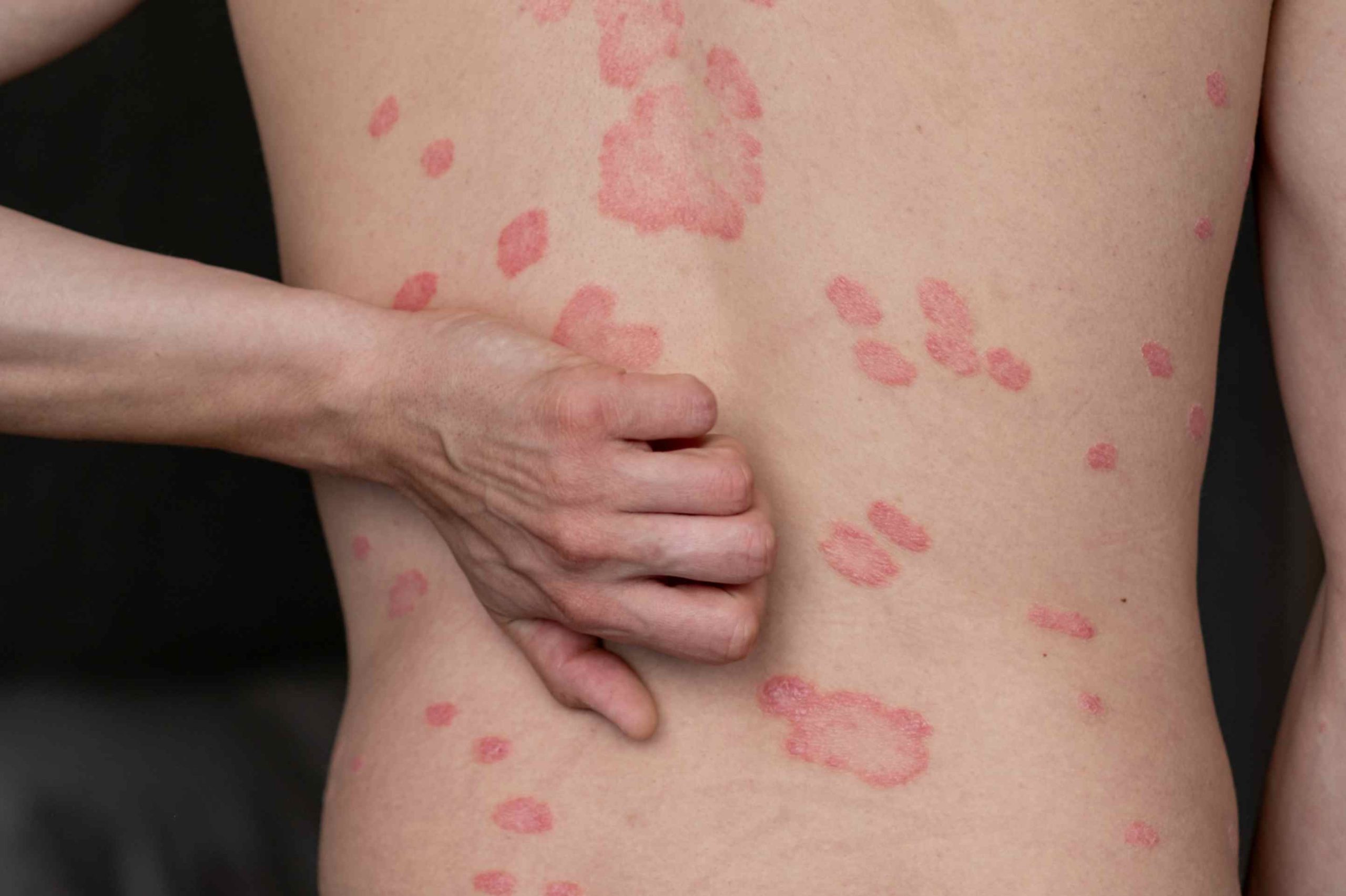
There are seven main types of psoriasis, including plaque, guttate, inverse, pustular, erythrodermic, scalp and nail psoriasis, each with a distinct appearance, trigger and treatment approach. Most people have only one type at a time.
In this blog, we will know how to identify each type, understand what causes psoriasis, and find out when you should seek urgent help.
What Is Psoriasis?
Psoriasis is a long-term skin condition linked to the immune system. It causes skin cells to be produced faster than usual, leading to a build-up of cells that forms patches on the skin. According to the NHS, psoriasis affects around 2% of people in the UK and is not contagious.
Psoriasis can look different depending on your skin tone. On darker skin, affected areas may appear purple, dark brown or grey rather than the typical red appearance seen on lighter skin.
What Are the Main Types of Psoriasis?
Psoriasis is generally grouped into common types and rarer forms that can be more serious and may need urgent medical attention.
Common Types of Psoriasis
Plaque, guttate, scalp, inverse and nail psoriasis are the types most people encounter. They can affect different areas of the body and may develop gradually, though guttate psoriasis often appears more suddenly.
- Plaque psoriasis: the most common type, causing raised, scaly patches on the elbows, knees, scalp and lower back.
- Guttate psoriasis: small, drop-shaped spots across the torso and limbs, often following a throat infection, most common in children and young adults, per nidirect.gov.uk.
- Scalp psoriasis: thick, scaly patches on part or all of the scalp, which can occasionally cause temporary hair loss.
- Inverse psoriasis: smooth, red patches in skin folds such as the armpits, groin and under the breasts.
- Nail psoriasis: pitting, discolouration or thickening of the finger and toenails, affecting around half of people with psoriasis.
Rare and Serious Types of Psoriasis
Pustular and erythrodermic psoriasis are rare, more severe forms that can develop suddenly and, in some cases, require emergency treatment.
- Pustular psoriasis: white or yellow pus-filled blisters surrounded by red skin, which may be localised to the hands and feet or spread across the body.
- Erythrodermic psoriasis: a rare condition causing widespread redness and shedding of skin over most of the body, affecting the body’s ability to regulate temperature.
What Causes Psoriasis?
Psoriasis is linked to an overactive immune system that speeds up the production of skin cells. It can also run in families. The exact cause is not fully understood, but the NHS identifies several factors that can trigger flare-ups, including stress, skin injury, infections, certain medicines, alcohol and smoking.
When Should You Seek Urgent Medical Help?
Call 999 or go to A&E if your skin rapidly becomes red and develops white, pus-filled bumps that join together, or if you develop pus-filled patches on your feet or fingertips. These symptoms can indicate generalised pustular or erythrodermic psoriasis, both of which can require emergency treatment.
This is particularly important if you also develop symptoms such as a fever or fast heartbeat.
How Is Psoriasis Treated?
Treatment depends on the type and severity of psoriasis. It often starts with topical treatments before moving on to specialist therapies when needed. Options include emollients to soften the skin, vitamin D creams and topical steroids. Light therapy and specialist medicines may be used for moderate to severe psoriasis.
Speak to a Pharmacist About Your Psoriasis Symptoms
If you are noticing scaly patches, nail changes or persistent flare-ups, our pharmacists can help you understand which type of psoriasis you may have and recommend suitable treatment. Book an Appointment with Pharmacy To My Door and complete our online enquiry form to request a call back from a pharmacist, who can discuss your symptoms and arrange a convenient time for your private consultation.
Frequently Asked Questions
What are the seven types of psoriasis?
The main types are plaque, guttate, inverse, pustular, erythrodermic, scalp and nail psoriasis, each affecting the skin differently and requiring its own treatment approach.
What is the most common type of psoriasis?
Plaque psoriasis is the most common type, accounting for the large majority of cases and typically appearing as raised, scaly patches on the elbows, knees, scalp and lower back.
Can psoriasis change from one type to another?
Yes. The NHS notes that one type of psoriasis can change into another or become more severe over time, and some people experience two types together.
Is psoriasis contagious?
No. Psoriasis cannot be passed from person to person through contact, as it is caused by the immune system rather than an infection.
What triggers a psoriasis flare-up?
Common triggers include stress, skin injury, certain infections, some medicines, and drinking alcohol or smoking, though triggers vary from person to person.
When should I see a doctor about psoriasis?
See a GP if you think you have psoriasis or your current treatment isn’t working, and seek emergency help if you develop widespread pus-filled bumps, fever or a fast heartbeat.