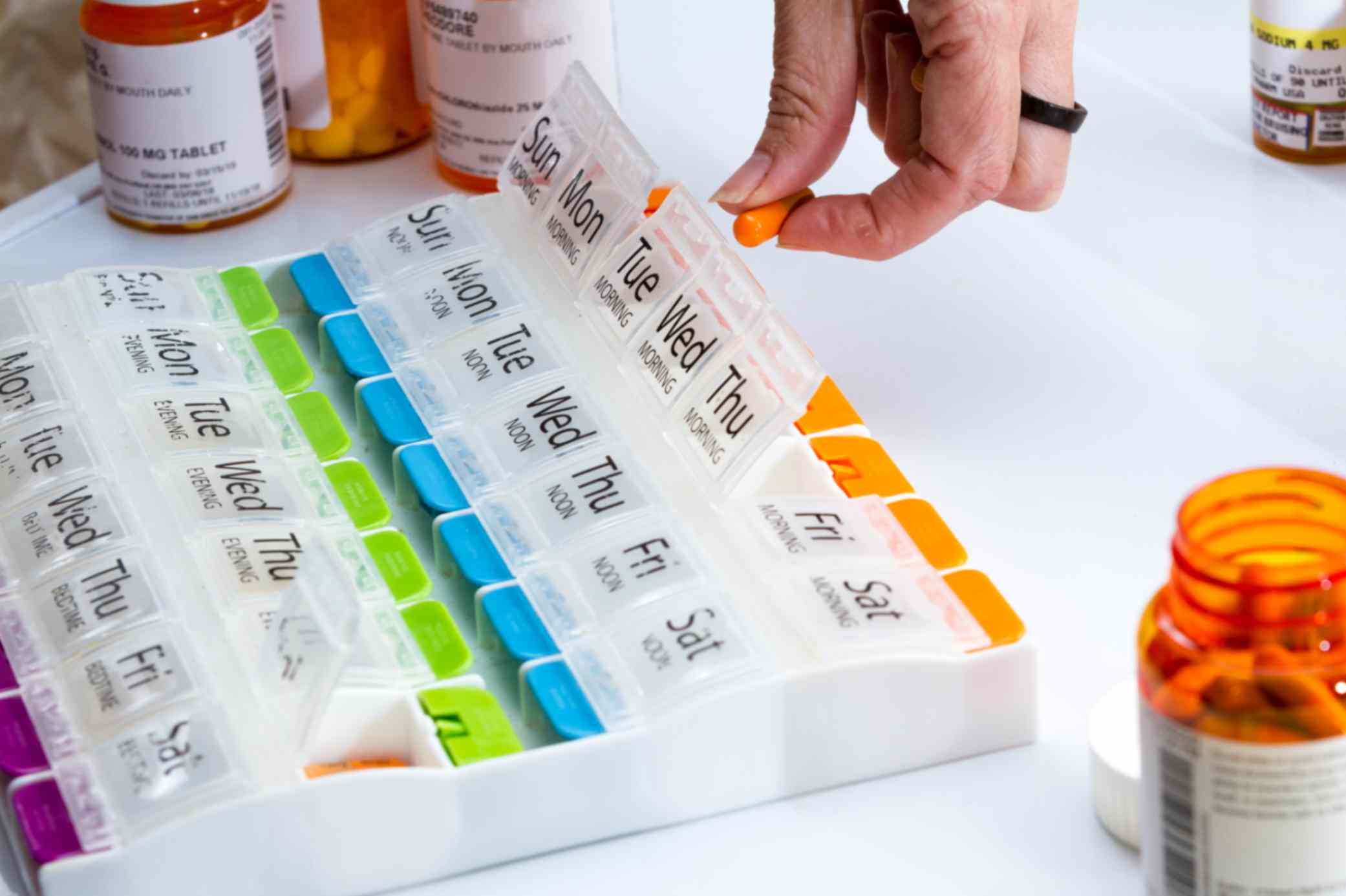
A dosette box is a medication organiser that divides your daily doses into individual compartments, usually arranged by day and time of day. For anyone taking multiple medicines or finding it difficult to keep track of their tablets, it is a practical and well-established tool for staying on top of a medication routine.
In pharmacy, dosette boxes are also known as multi-compartment compliance aids (MCAs) or monitored dosage systems (MDS). Whatever they are called, their purpose is the same: to make taking medication correctly as straightforward as possible.
How Does a Dosette Box Work?
A dosette box is typically divided into a grid of small compartments. Each compartment corresponds to a specific day and time of day, for example, Monday morning, Monday lunchtime, Monday evening, and Monday night, repeated across a full week.
Your pharmacist fills each compartment with the correct tablets for that dose and time. When it is time to take your medication, you simply open the relevant compartment and take what is inside. There is no need to count tablets, refer to multiple packets, or remember what you have already taken.
Most dosette boxes cover one week, though two-week versions are also available for patients whose circumstances suit a longer cycle.
Who Is a Dosette Box Most Suitable For?
A dosette box is not right for everyone, but it can make a significant difference for patients in certain situations. It tends to be most beneficial for:
- Elderly patients taking several different medicines each day, where managing individual packets becomes confusing or physically difficult
- People with memory difficulties, including those in the early stages of dementia, who benefit from a clear visual confirmation of whether a dose has been taken
- Patients recovering from illness or surgery who are temporarily managing a more complex medication routine than usual
- Carers overseeing the medication of a relative or dependent, who need confidence that doses are being taken correctly
- Anyone who has previously missed doses or accidentally doubled up on medication due to an unclear routine
If you are unsure whether a dosette box would be appropriate for you or someone you care for, your pharmacist is the right person to speak to. They can assess the medication involved and advise on the most suitable option.
Are There Any Limitations to Be Aware Of?
A dosette box works well for most standard solid-dose medicines such as tablets and capsules. However, not all medications can be dispensed this way. Some medicines require specific storage conditions, such as refrigeration, and cannot be placed in a pre-filled compliance aid. Others are sensitive to light or humidity, meaning that removing them from their original foil packaging may affect their stability.
Liquid medicines, inhalers, patches, and injections are also dispensed separately and are not included in a dosette box. Your pharmacist will review your full medication list before agreeing to set up a compliance aid, and will flag anything that needs to remain in its original packaging.
Can You Get a Dosette Box Through the NHS?
A dosette box itself is not a standard NHS prescription item. However, many NHS pharmacies, including those offering specialist medicines management services, will fill a compliance aid as part of the support they provide to eligible patients. Whether this service is available, and whether there is a charge, depends on your local pharmacy and your individual circumstances.
It is worth speaking directly to your pharmacy team about what is available in your area. In some cases, a GP or community pharmacist may refer patients to a medicines management service where compliance aids are part of a broader package of support.
A Note on Medication Safety
A dosette box makes it easier to take medication correctly, but it does not replace the need for regular medication reviews. If your prescription changes, or if a medicine is stopped or added, your compliance aid will need to be updated promptly. Taking the wrong dose because an outdated box has not been refreshed is a risk that should be managed carefully.
Always inform your pharmacist as soon as there is any change to your prescription. If you are a carer managing someone else’s medication, make sure there is a clear process in place for communicating any changes to the dispensing pharmacy.
How Pharmacy To My Door Can Help
At Pharmacy To My Door, we make managing your medication simple, safe, and stress-free. Our GPhC-registered pharmacy team supports patients and carers with dosette boxes, repeat prescription management, and free NHS prescription delivery throughout the UK.
Whether you need help organising multiple medicines, support with repeat prescriptions, or advice from a trusted pharmacy professional, we’re here to help.
Contact us today to discover how Pharmacy To My Door can make your medication routine easier and more manageable.
This article is for informational purposes only and does not constitute medical or pharmaceutical advice. If you have questions about your medication or whether a compliance aid is suitable for you, please speak to your GP or a GPhC-registered pharmacist.
Frequently Asked Questions (FAQ’s)
The terms are often used interchangeably, but there is a practical distinction. A weekly pill organiser is typically a simple tray you fill yourself at home. A dosette box or multi-compartment compliance aid is filled and sealed by a pharmacist, providing an additional layer of accuracy and accountability. For patients on complex or high-risk medication, a pharmacist-prepared compliance aid is generally the safer option.
Yes, with appropriate consent in place. If you are a carer or family member managing medication on behalf of someone else, speak to the dispensing pharmacy about the process. The pharmacy will need to hold the person’s prescription and will require confirmation of the arrangement.
If you realise you have missed a dose, do not simply take a double dose the next time. Check the patient information leaflet for the medicine in question, or contact your pharmacist or GP for guidance. What is appropriate will depend on the specific medicine involved.
Most compliance aids are prepared on a weekly basis, aligned with the standard 28-day NHS prescription cycle. Your pharmacist will typically prepare a new box in advance of the current one running out, particularly if your medication is being delivered.
It can be, particularly in the earlier stages when a person is still taking their own medication but benefits from a clear and simple system. For more advanced dementia, where supervision is needed at each dose, a carer will usually be present regardless. A pharmacist can advise on whether a compliance aid is appropriate based on the individual’s circumstances.