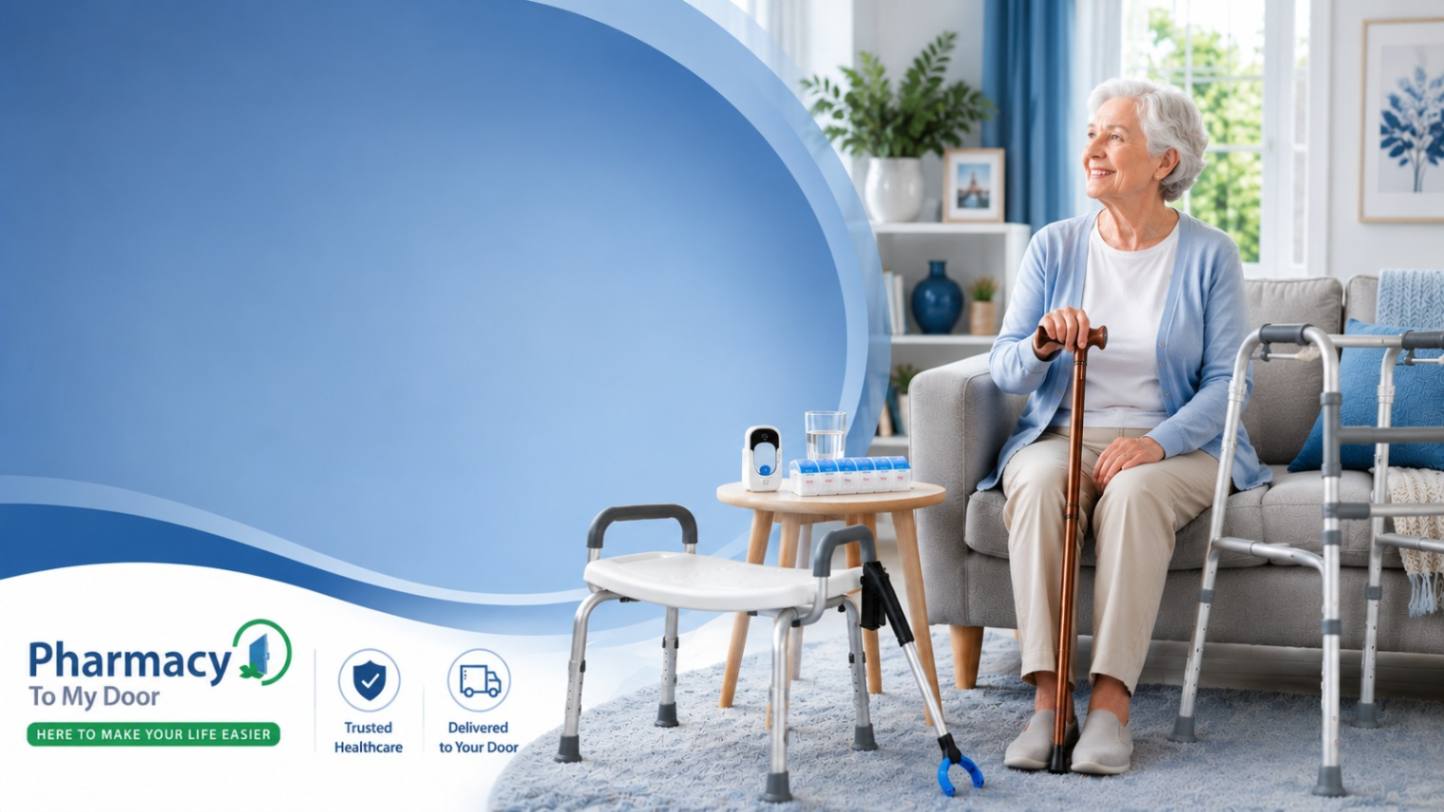
A pharmacy is often one of the most practical first ports of call when someone needs support with daily living. Beyond dispensing medicines, many pharmacies stock or can source a range of daily living aids and disability equipment that help elderly patients and those with limited mobility continue to live independently and safely at home.
If you are unsure what is available, or where to start, this article gives a clear overview of the types of products a pharmacy may offer and how to access additional support through the NHS or local services.
What Are Daily Living Aids?
Daily living aids are products designed to help people carry out everyday tasks that might otherwise be difficult due to age, illness, disability, or reduced mobility. They are not medical devices in the clinical sense, but they play an important practical role in keeping people safe and independent in their own homes.
The range of products that fall under this heading is broad, covering everything from simple grab handles and non-slip bath mats through to walking frames, raised toilet seats, and pill dispensers. A pharmacist can often advise on which type of aid is most appropriate for a particular need.
What Can You Typically Find at a Pharmacy?
The range available will vary between pharmacies, but many community and online pharmacies stock or can order the following categories of independent living aids:
- Mobility support: walking sticks, walking frames (Zimmer frames), rollators, and crutches.
- Bathroom safety: bath grab rails for elderly users, non-slip bath and shower mats, bath seats and boards, and raised toilet seats.
- Medication management: dosette boxes, multi-compartment compliance aids, automatic pill dispensers, and large-print medication labels.
- Dressing and grooming: long-handled shoe horns, dressing sticks, adapted clothing fasteners, and easy-grip brushes and combs.
- Kitchen and eating: angled cutlery, non-slip mats, kettle tippers, and easy-open jar openers.
- Communication and safety: personal alarms and fall alert devices for people living alone.
If a product is not held in stock, many pharmacies can source it to order. It is always worth asking, as the pharmacy team will often be aware of local suppliers and specialist services in your area.
Can You Get Living Aids Through the NHS?
Some daily living aids NHS provision is available, but it depends on individual circumstances and a formal assessment. The NHS and local councils provide certain disability equipment and adaptations through occupational therapy services. An occupational therapist (OT) can assess a person’s needs at home and recommend aids or adaptations that may be provided free of charge or at a subsidised cost.
Common examples of equipment that may be provided through this route include walking assistance devices for elderly patients, grab rails fitted by a qualified contractor, and major home adaptations funded through a Disabled Facilities Grant.
To access an OT assessment, speak to your GP or contact your local council’s adult social care team. The process can take time, so if a product is needed urgently and can be purchased at reasonable cost, buying through a pharmacy or specialist retailer is often the more immediate option.
What About Walking Aids and Mobility Equipment?
Walking assistance devices for elderly patients are among the most commonly sought items at a pharmacy. A basic walking stick or frame can often be purchased directly, without a prescription or referral. However, for more complex mobility needs, such as a wheelchair or specialist orthotic device, a GP or physiotherapist referral is typically required for NHS provision.
If you are unsure whether the aid you need is suitable for your situation, a pharmacist can offer initial guidance. For more detailed assessment, a GP or community physiotherapy referral is the appropriate route.
A Word on Bathroom Safety
Falls in the bathroom are among the most common causes of injury in older adults, and bath grab rails for elderly users are one of the most effective and straightforward preventative measures available. Many pharmacies stock basic grab rails that can be fitted without professional help, though fixed rails installed by a qualified contractor offer greater security.
If you or someone you care for is concerned about bathroom safety, an occupational therapy assessment can identify the most appropriate adaptations. In the meantime, non-slip mats, bath seats, and portable grab handles provide a practical interim measure that can be sourced quickly and at low cost.
How Pharmacy To My Door Can Help
At Pharmacy To My Door, we support elderly patients, patients with long-term conditions, and their carers with the practical side of managing health at home. Whilst our core service is the delivery of NHS and private prescriptions across the UK, our team is familiar with the wider range of support available and happy to point you in the right direction.
If you or a loved one would benefit from a conversation about medication management, compliance aids, or accessing the right support services, our GPhC-registered pharmacy team is here to help.
Looking for support with your medication or independent living at home? Book an appointment with our pharmacy team today. We deliver NHS prescriptions free across the UK and are always happy to help.
This article is for informational purposes only and does not constitute medical, clinical, or occupational therapy advice. If you are concerned about someone’s safety at home or their need for disability equipment, please speak to their GP or contact your local council’s adult social care team for a formal assessment.
Frequently Asked Questions (FAQ’s)
Yes, for most standard daily living aids. Items such as walking sticks, grab rails, non-slip mats, bath seats, and pill organisers can usually be purchased directly from a pharmacy without a prescription or referral. For more complex equipment, such as wheelchairs or specialist orthotics, a GP or therapist referral may be needed for NHS provision.
Some are, following a formal assessment by an occupational therapist. The NHS and local councils can provide certain disability equipment and home adaptations at no cost to eligible patients. To access this, speak to your GP or contact your local council’s adult social care team. The eligibility criteria and waiting times vary by area.
The most appropriate grab rail will depend on the individual’s needs and the layout of the bathroom. Suction-cup rails offer a quick, no-drill option but are less secure than fixed rails. A professionally installed fixed rail, recommended following an occupational therapy assessment, provides the greatest safety. A pharmacist or OT can advise on the most suitable option for a specific situation.
The right walking aid depends on the level of support needed, the person’s strength and balance, and where it will primarily be used. A pharmacist can offer general guidance, but for a more detailed assessment, a GP referral to a physiotherapist or occupational therapist is the appropriate route. Using the wrong walking aid can increase rather than reduce the risk of falls.
A pharmacist can offer practical guidance on commonly available daily living aids and point you towards appropriate local services. For more complex needs, including home adaptations, specialist mobility equipment, or falls prevention, an occupational therapist is the most qualified person to carry out a proper assessment.