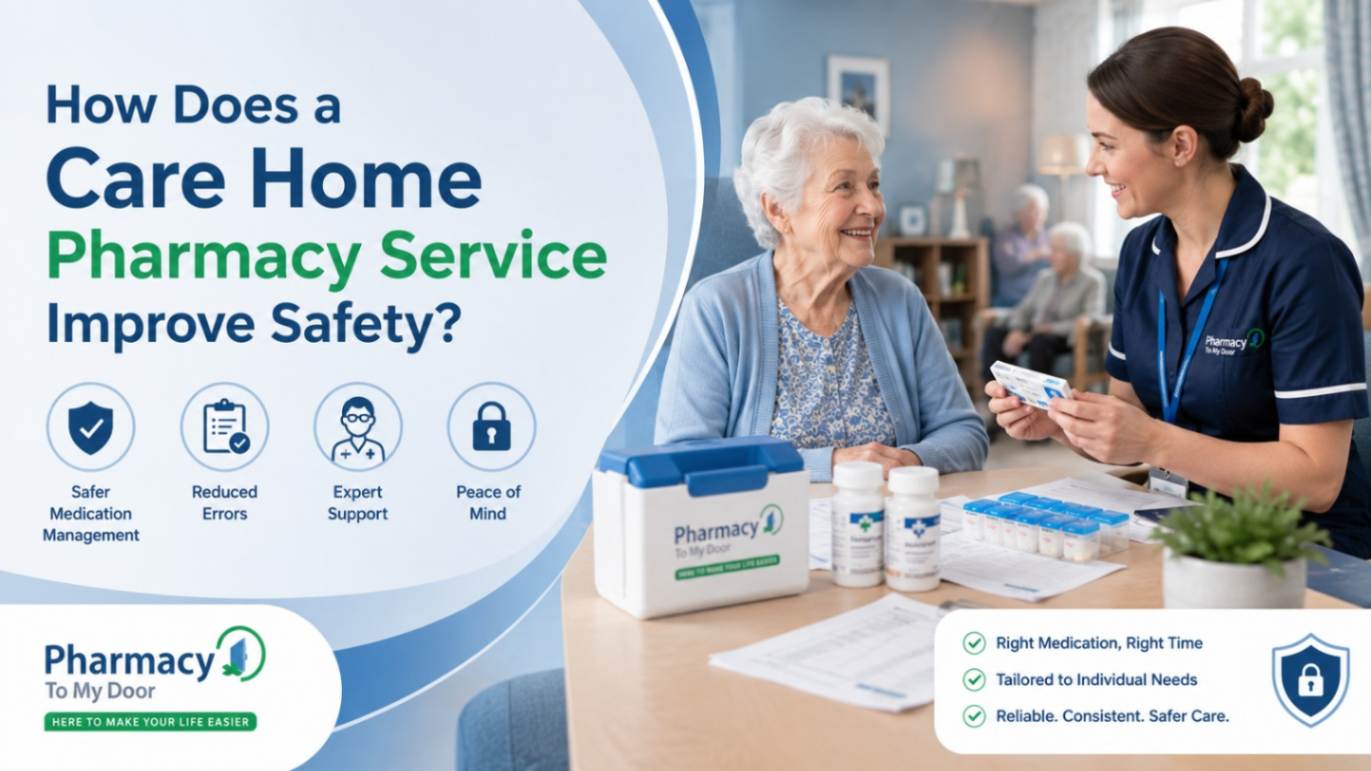
Medication management in care homes is one of the most complex and consequential aspects of residential care. Residents are often elderly, living with multiple long-term conditions, and taking several medicines simultaneously. When pharmacy support is well organised and specifically tailored to a care setting, it has a direct and measurable impact on resident safety.
This article explains what a dedicated care home pharmacy service involves, why medication errors in care homes remain a significant concern, and what care homes and families should look for when assessing the quality of pharmacy provision.
Why Medication Safety in Care Homes Matters
Residents of care homes are among the most medically complex patients in the health system. Many are living with dementia, heart disease, diabetes, or other conditions that require careful, ongoing medication management. The risks associated with getting this wrong are serious.
Medication errors in care homes can include missed doses, incorrect doses, administering medicines that have been discontinued, or failing to recognise adverse drug reactions. Research has consistently highlighted these errors as a significant patient safety issue in residential care settings, with consequences ranging from avoidable hospital admissions to, in the most serious cases, preventable harm.
A well-structured home care pharmacy service addresses these risks systematically, rather than leaving them to be managed reactively.
What Does a Care Home Pharmacy Service Include?
The scope of services a pharmacy provides to a care home will vary, but a comprehensive service typically covers the following:
- Regular supply of residents’ medicines in monitored dosage systems or multi-compartment compliance aids, which reduce the risk of missed or duplicated doses.
- Medication reviews carried out in conjunction with the GP or clinical pharmacist, to identify medicines that may no longer be appropriate or that carry an elevated risk for an individual resident.
- Clear and accurate medication administration records (MARs) supplied with each dispensing cycle, to support accurate recording by care staff.
- Prompt response to prescription changes, including same-day or next-day dispensing where clinically urgent.
- Support with controlled drug management, including accurate stock reconciliation and disposal.
- Advice and training for care staff on medicine storage, administration, and the recognition of adverse effects.
- A named pharmacist point of contact who understands the home’s residents and can respond to queries quickly.
The continuity of that relationship matters. A pharmacist who knows the home and its residents is better placed to identify changes, flag concerns, and communicate effectively with GPs and other clinicians.
Home Care Services for Dementia: Particular Considerations
Home care services for dementia residents require an additional layer of care and vigilance. People living with dementia may be unable to communicate discomfort or side effects clearly, may resist taking medication, or may be more susceptible to adverse reactions from certain medicines.
Some medicines that are commonly prescribed in residential settings, including certain antipsychotics and sedatives, carry documented risks for people with dementia and are subject to specific clinical guidance. A pharmacy team experienced in dementia care will be alert to these issues and will support the care home in monitoring prescribing patterns and raising concerns through appropriate channels.
Clear labelling, simplified medication regimens where clinically appropriate, and good communication between the pharmacy, GP, and care staff are all particularly important in dementia care settings.
How Do Monitored Dosage Systems Reduce Error?
One of the most practical tools in care home medication management is the monitored dosage system (MDS), sometimes referred to as a dosette box or blister pack. Medicines are dispensed into individual compartments for each day and time of day, sealed, and labelled clearly.
This approach reduces the risk of administration errors by removing the need for care staff to count out tablets from multiple original packs during each medication round. It also provides an immediate visual check of whether a dose has been given, which supports accurate recording and handover between shifts.
Not all medicines are suitable for MDS dispensing. Liquids, patches, inhalers, and some temperature-sensitive medicines must be managed separately. A good pharmacy service will clearly document which medicines are dispensed in the MDS and which are held separately, to avoid any ambiguity for care staff.
What Should a Care Home Look for in a Pharmacy Partner?
Not all pharmacy services are equally well suited to care home provision. When evaluating a pharmacy partner, care home managers and families should consider:
- GPhC registration and a verifiable compliance record
- Experience specifically in care home or residential settings, not just community pharmacy
- Clear processes for handling prescription changes, urgent supplies, and out-of-hours queries
- The quality and accuracy of medication administration records supplied
- A named pharmacist or pharmacy team who provides continuity and builds familiarity with residents
- Willingness to engage with the care home’s GP, clinical pharmacist, and CQC inspection requirements
- Transparent communication with families where appropriate and consented
CQC inspections assess medicines management as a key component of safe care. A strong pharmacy partnership directly supports a care home’s ability to demonstrate good practice in this area.
How Pharmacy To My Door Supports Care Settings
At Pharmacy To My Door, we are a GPhC-registered pharmacy with experience in supporting patients who require a more structured approach to their medication. We understand the importance of accuracy, consistency, and clear communication when it comes to medicines management, particularly for elderly and vulnerable patients.
If you are a care home manager, a carer, or a family member looking to understand the options available for medication support in a residential setting, our pharmacy team is happy to have an initial conversation about your needs.
Looking for reliable pharmacy support for a care home or residential setting? Contact us at the Pharmacy To My Door team today to find out how we can help.
This article is for informational purposes only and does not constitute clinical, regulatory, or legal advice. Care homes are regulated by the Care Quality Commission (CQC). For specific guidance on medicines management requirements in residential care, refer to CQC standards and seek advice from a qualified pharmacist or clinical lead.
Frequently Asked Questions (FAQ’s)
A care home pharmacy service is a structured arrangement between a residential care home and a registered pharmacy. It covers the regular supply of residents’ medicines, medication administration records, reviews, controlled drug management, and ongoing clinical support. The aim is to ensure medicines are managed safely, accurately, and in line with each resident’s current clinical needs.
Medication errors in care homes are a recognised patient safety issue in the UK. Research and NHS safety reports have identified missed doses, prescribing errors, and administration mistakes as recurring problems in residential settings. A well-structured pharmacy service, combined with properly trained care staff and regular medication reviews, significantly reduces the risk of these errors occurring.
Yes. Care homes are generally free to choose their pharmacy provider, provided that provider is GPhC-registered and able to meet the home’s clinical and operational needs. The quality of this relationship has a direct bearing on medication safety, so the choice of pharmacy partner is an important one for any care home manager to consider carefully.
Pharmacies experienced in dementia care can provide support with simplified medication regimens, appropriate labelling, monitoring of high-risk medicines, and staff guidance on recognising adverse reactions. Home care services for dementia residents should also involve regular liaison with the GP and, where appropriate, the wider multidisciplinary team to review whether each resident’s medicines remain suitable over time.
A monitored dosage system (MDS) is a blister pack or compartmentalised tray filled and sealed by the dispensing pharmacy. Each compartment corresponds to a specific day and time, making it straightforward for care staff to administer the correct medicines at each medication round. MDS dispensing reduces the risk of error and supports accurate recording, though not all medicines are suitable for this format.