The main difference between impetigo and ringworm is the cause. Impetigo is a bacterial infection that causes golden crusted sores, while ringworm is a fungal infection that causes a red or silvery ring-shaped rash. Both are common and contagious but need different treatments.
In this blog, we will learn what impetigo and ringworm are, how their symptoms differ, whether each is contagious, and when to get expert help.
What Is Impetigo?
Impetigo is a bacterial skin infection caused by Staphylococcus aureus or Streptococcus pyogenes bacteria, according to NHS guidance on impetigo. It is the most common skin infection in young children in the UK, although anyone can develop it. It often starts on broken skin, such as a cut, scratch or insect bite.
What Is Ringworm?
Despite its name, ringworm has nothing to do with worms. It is a fungal skin infection, as stated by NHS guidance on ringworm. It is caused by fungi called dermatophytes, which infect the outer layer of the skin. Ringworm can appear almost anywhere on the body, including the scalp and groin.
Impetigo vs Ringworm: Key Differences
Impetigo and ringworm can look alike at first, since both cause red, irritated patches, but their causes and treatments differ. The table below highlights the main differences to help you tell them apart:
| Feature | Impetigo | Ringworm |
| Cause | Bacteria | Fungi (dermatophytes) |
| Appearance | Red sores, golden crust | Red or silvery ring shaped rash |
| Common sites | Face, nose, mouth, hands | Body, scalp, groin, feet |
| Treatment | Antibiotic cream or tablets | Antifungal cream or tablets |
| Onset after exposure | 4 to 10 days | 4 to 14 days |
Impetigo Symptoms
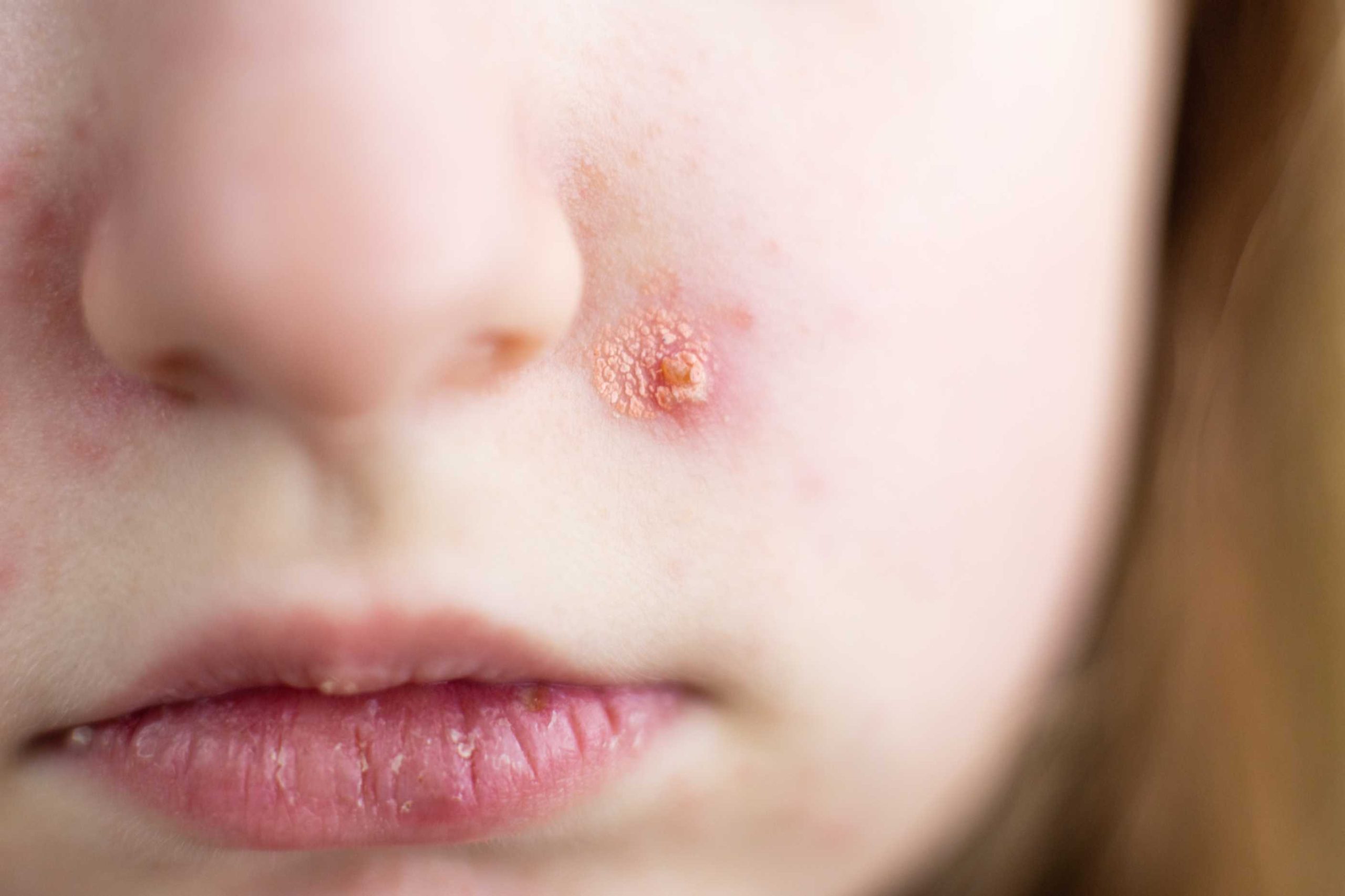
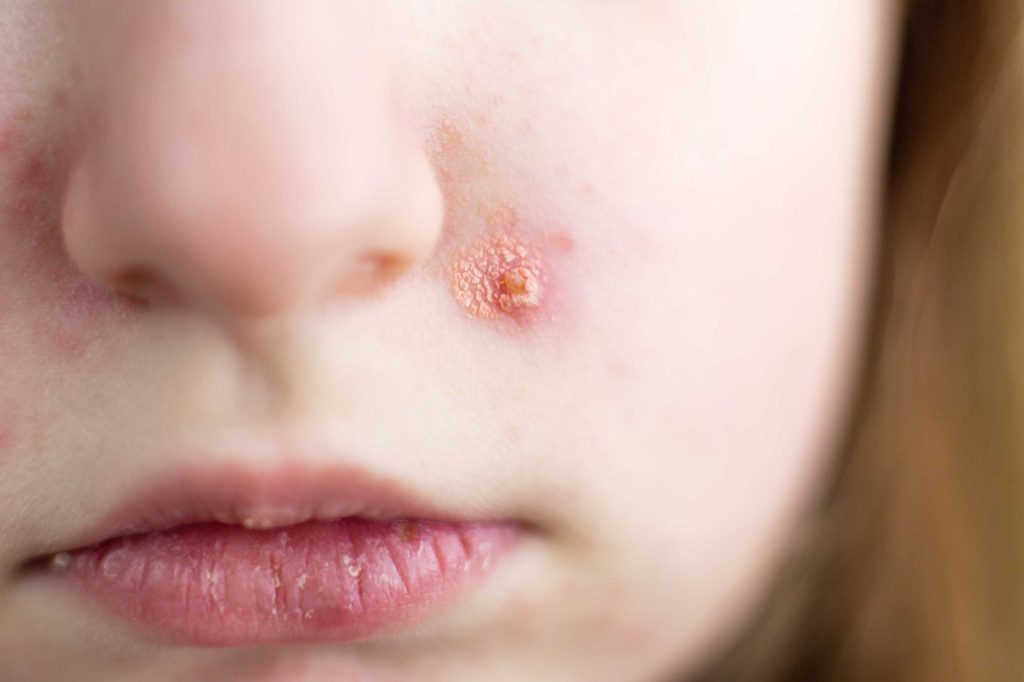
Impetigo often starts with small red sores, particularly around the nose and mouth. The sores can burst quite quickly, leaving behind a thick golden crust. They may be itchy but aren’t usually painful. In more widespread cases, swollen glands or a mild fever can also occur.
Ringworm Symptoms
Ringworm usually starts as a small red or silvery patch that gradually spreads outwards, forming a ring with a clearer centre and a scaly, itchy edge. If it affects the nails, they can become thickened. Ringworm on the scalp can also cause patches of hair loss.
Are Impetigo and Ringworm Contagious?
Yes, both impetigo and ringworm are contagious, although they spread in different ways. Impetigo can pass through skin-to-skin contact or by sharing items such as towels and bedding. It remains contagious until 48 hours after antibiotic treatment starts, or until the sores have crusted over.
Ringworm can spread through contact with an infected person, pet or contaminated surface, such as a gym mat or hairbrush. It usually remains contagious until antifungal treatment has started.
How to Tell Them Apart
You can usually tell them apart by looking closely at the rash. Golden or honey-coloured crusts, particularly around the nose or mouth, are typical of impetigo. Ringworm is more likely to look like a spreading ring with a clearer centre. If you’re not sure what you’re looking at, a pharmacist can examine the skin and confirm which condition you have.
When to See a Pharmacist or GP
Speak to a pharmacist or GP if:
- The rash is spreading quickly.
- It becomes very painful.
- It produces pus.
- You develop a fever.
- The infection affects a young child.
- You have diabetes or a weakened immune system.
These groups may need prescription treatment sooner, so it’s worth getting advice promptly rather than waiting to see if the rash settles on its own.
Get the Right Skin Infection Treatment from Pharmacy To My Door
If you have a persistent rash and aren’t sure whether it’s impetigo or ringworm, Pharmacy To My Door can help you find the right treatment. Start by completing a short online questionnaire, then book an appointment with a pharmacist for medical advice. If treatment is appropriate, it can be prescribed following your consultation. Start your online assessment to get started.
Frequently Asked Questions
What is the main difference between impetigo and ringworm?
Impetigo is a bacterial infection that causes golden crusted sores, while ringworm is a fungal infection that causes a red or silvery ring-shaped rash. They look different and need different treatments.
Is ringworm contagious?
Yes, ringworm is contagious. It spreads through skin contact with an infected person or animal or by touching contaminated items such as towels, hairbrushes or gym equipment.
Is impetigo more contagious than ringworm?
Impetigo tends to spread more quickly through close contact, especially among children, while ringworm spreads more gradually but can also pass easily through shared items and surfaces.
What is ringworm caused by?
Ringworm is caused by a group of fungi called dermatophytes, not by a worm. These fungi live on the outer layer of skin, hair and nails.
Can impetigo and ringworm be treated with the same medicine?
No. Impetigo needs an antibiotic cream or tablets, since it is bacterial, while ringworm needs an antifungal cream or tablets, since it is fungal. Using the wrong treatment will not clear the infection.
How do I know if my rash is impetigo or ringworm?
Golden, honey-coloured crusts around the nose or mouth suggest impetigo, while a spreading ring-shaped rash with a clear centre suggests ringworm. A pharmacist can confirm which one you have.