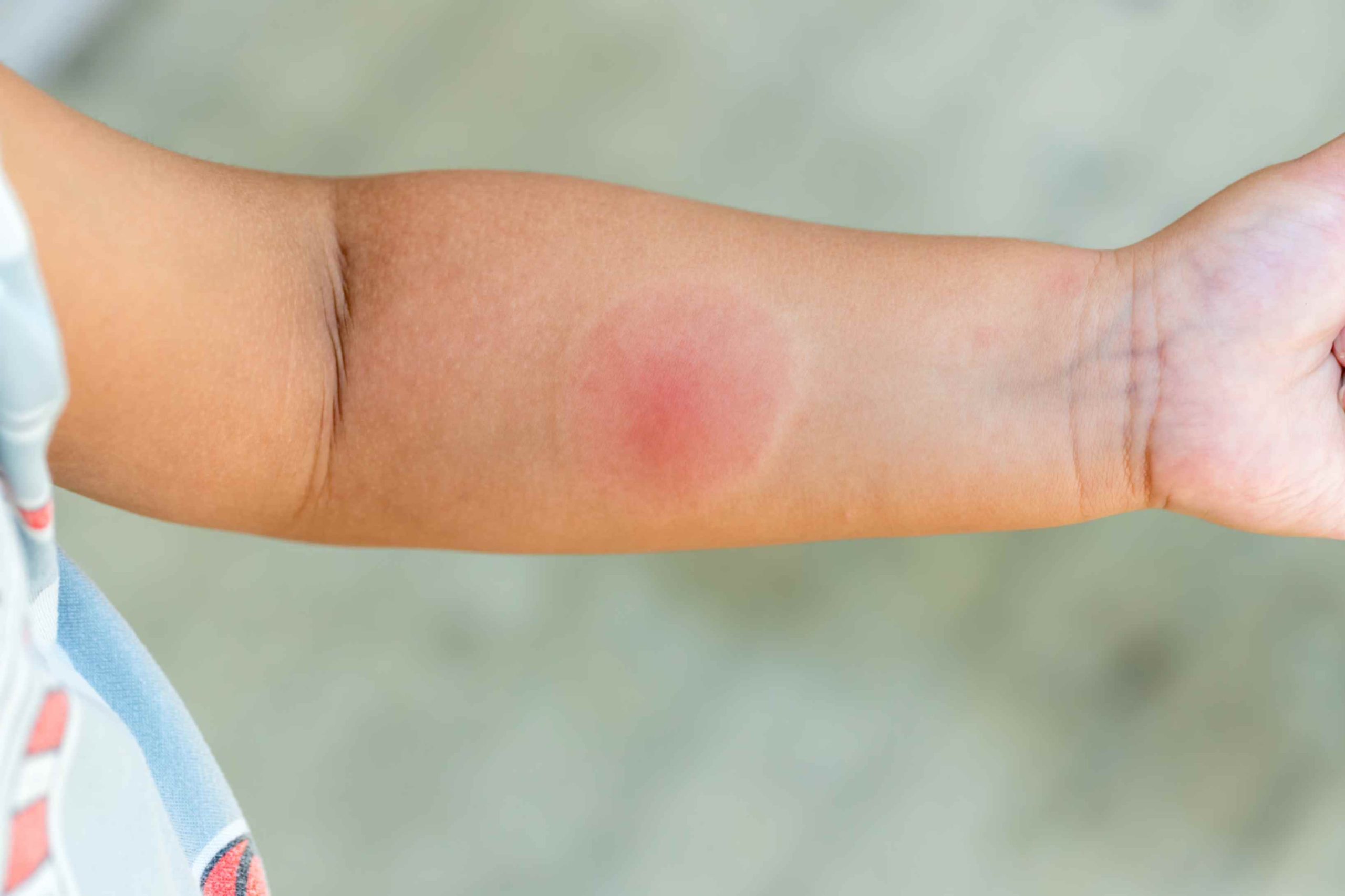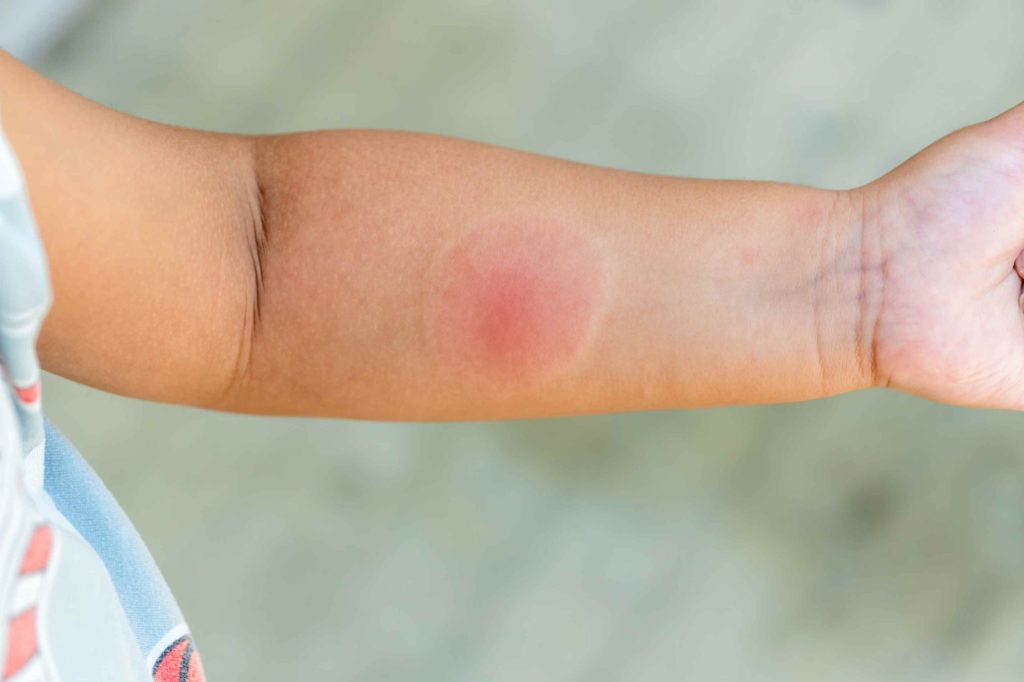
An infected insect bite usually looks and feels worse after 48 hours, with spreading redness, growing swelling, increasing pain, heat or pus. A normal bite, by contrast, is itchy and settles within a few days. Most bites in the UK are harmless, but knowing when one has crossed the line into infection means you can act before it becomes something more serious.
In this blog, we will look at what a normal bite looks like, the key signs of an infected insect bite to watch for, how to treat it, and when to seek help from a pharmacy or your GP.
What Does a Normal Insect Bite Look Like?
A normal insect bite is a small, red, itchy lump that appears quickly and gradually fades within three to seven days. Bites from mosquitoes, midges, fleas and bedbugs may swell slightly at first, and some people react more strongly than others, but the general pattern is the same. The irritation peaks early, then steadily improves. If a bite is following that path, it is very unlikely to be infected.
Signs of an Infected Insect Bite
The clearest insect bite infection symptoms are redness that spreads, swelling that keeps growing, worsening pain, warmth around the bite, and pus or fluid weeping from the skin. Infection typically develops a day or two after the bite, often once scratching has broken the skin.
Spreading Redness and Swelling
Redness that expands beyond the original bite, especially in a widening circle or streak, suggests bacteria have entered the skin. This can sometimes lead to cellulitis, a deeper skin infection that needs prompt medical treatment.
Pain, Heat and Pus
An infected bite becomes increasingly painful and warm to the touch, rather than just itchy. Yellow or green pus, a weeping wound or a crust that keeps reforming are strong indicators of bacterial infection.
Fever and Feeling Generally Unwell
A high temperature, chills, swollen glands or flu-like achiness alongside a worsening bite means the infection may be spreading beyond the skin. These symptoms should never be ignored.
| Feature | Normal bite | Infected insect bite |
| Redness | Small, stable, fading | Spreading or streaking |
| Feeling | Itchy | Painful, hot, tender |
| Timeline | Improves within days | Worse after 48 hours |
| Discharge | None | Pus or weeping fluid |
Why Do Insect Bites Get Infected?
Bites become infected when bacteria from the skin or fingernails enter the wound, and scratching is the most common cause. An infected mosquito bite, for example, usually starts as ordinary itching that leads to broken skin, giving bacteria such as Staphylococcus aureus an easy way in.
Swollen Insect Bite Treatment at Home
Early self-care can settle a swollen bite and prevent infection from taking hold. The NHS recommends:
- Washing the area with soap and water.
- Applying a cold compress for at least 20 minutes to reduce swelling.
- Taking an antihistamine or using hydrocortisone cream to calm itching.
- Using paracetamol or ibuprofen for pain.
- Keeping the bite clean and resisting the urge to scratch.
When to Get Help for an Insect Bite Getting Worse
Seek advice the same day if redness is spreading, pain is increasing, pus appears, or you feel feverish or unwell. NICE guidance advises that most bites do not need antibiotics, but genuinely infected bites do, and delaying treatment risks cellulitis. Call 999 if someone has swelling of the face or throat, difficulty breathing or dizziness, as these are signs of a severe allergic reaction.
How Pharmacy To My Door Can Help with Infected Bites
You do not need a GP appointment to treat an infected insect bite. Under the NHS Pharmacy First scheme, pharmacists in England can assess infected insect bites in anyone aged one year and over and supply antibiotics where clinically appropriate.
With Pharmacy To My Door, you can treat an infected bite without leaving the house. Simply complete a short online questionnaire, book an appointment with one of our expert pharmacists, and receive personalised advice and, where appropriate, treatment. Do not wait for a bite to get worse. Book your online consultation today and get the care you need without the waiting room.
Frequently Asked Questions (FAQ’s)
Infection usually develops 24 to 48 hours after the bite, most often once scratching has broken the skin. A bite that suddenly worsens after initially improving is a classic sign.
Mild infections may improve with good hygiene and self-care. However, if you develop spreading redness, pus or a fever, you should seek professional treatment, as the infection could progress to cellulitis.
An infected mosquito bite is red, swollen, warm and painful rather than just itchy and may weep pus or fluid. The redness often spreads outwards from the original bite.
Only genuinely infected bites need antibiotics, and a pharmacist or GP can confirm this. Itching and mild swelling alone are usually an inflammatory reaction, not an infection.
Yes. Under the NHS Pharmacy First scheme, pharmacists can assess infected insect bites in people aged one and over and supply antibiotics where appropriate, without a GP appointment.
Allergic reactions appear quickly, usually within minutes to hours, and cause itching and swelling. Infections develop more slowly, over one to two days, and bring pain, heat, spreading redness and sometimes pus.