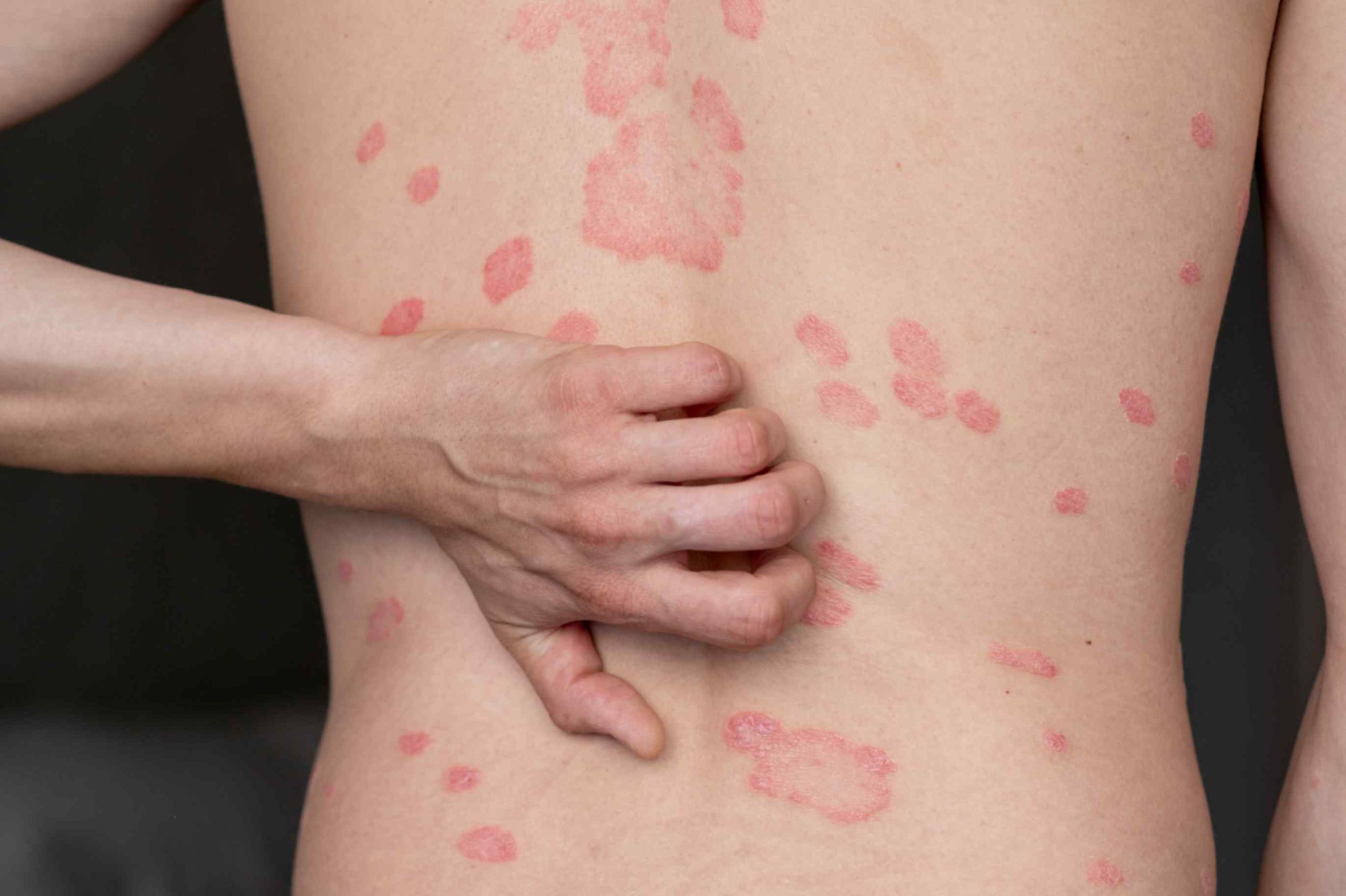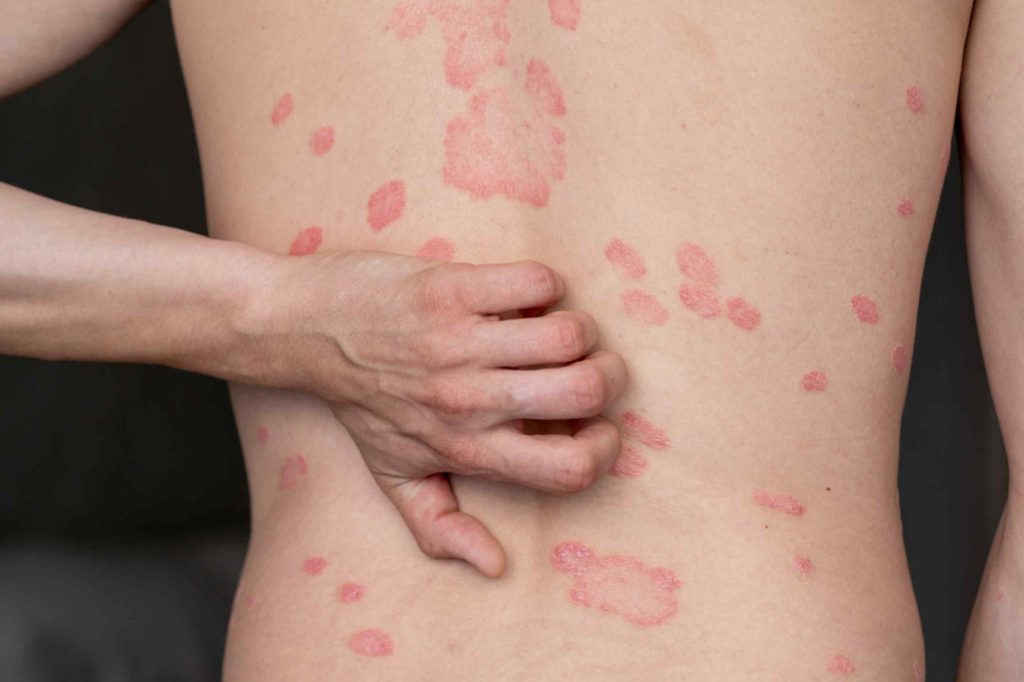
Psoriasis is a common skin condition that affects over a million people in the UK. It can cause red, flaky, and sometimes painful patches on your skin. These patches may look worrying, but one of the most common questions people ask is — is psoriasis contagious?
If you or someone close to you is living with psoriasis, it’s important to understand what causes it, how it behaves, and whether it can spread to others. Let us help to clear up the confusion.
Can Psoriasis Spread from One Person to Another?
The simple answer is no, psoriasis is not contagious. You cannot catch it by touching someone who has it, sharing towels, or being in close contact. It is not caused by a virus or bacteria, so it does not spread like a cold or flu.
This means you can’t get psoriasis from someone else, and you can’t pass it on either. Despite this, many people living with psoriasis often face social misunderstandings because of how the skin looks.
So, What Causes Psoriasis?
Psoriasis is an autoimmune condition. This means your immune system, which normally protects you from illness, starts attacking your own body — in this case, your skin cells.
Your body starts making new skin cells too quickly. These cells build up on the surface of the skin, forming red, scaly patches. These may appear on the elbows, knees, scalp, or other parts of the body.
Some of the main causes of psoriasis or triggers include:
- Genetics (family history of psoriasis)
- Stress
- Infections (like throat infections)
- Cold weather
- Certain medicines
- Skin injuries or cuts
- Drinking too much alcohol or smoking
While it’s not something you can catch, it can still flare up without warning, especially when triggered by stress or illness.
How Psoriasis Spreads on Your Body
While you can’t catch it from others, psoriasis can spread on your own body. For example, it might start on your scalp and later appear on your back or elbows.
This spreading doesn’t mean the condition is contagious. It’s simply a reaction from your immune system acting up in different parts of your skin.
Living with Psoriasis
Living with psoriasis can be difficult, not just physically but emotionally. The appearance of the patches may lead to low self-esteem or anxiety, especially if people react negatively or believe myths about the condition.
It’s important to remember:
- Psoriasis is not anyone’s fault.
- It’s not caused by poor hygiene.
- You can live a full and healthy life with proper care.
Psoriasis often comes and goes in phases. Some people have mild symptoms, while others may experience more severe flare-ups. Treatment can help manage the condition and reduce symptoms.
Managing Psoriasis: What Can Help?
There’s no permanent cure for psoriasis, but many treatments can help control it. These may include:
- Moisturisers to reduce dryness and scaling
- Steroid creams or ointments
- Vitamin D-based creams
- Light therapy (UVB treatment)
- Prescription tablets or injections for severe cases
- Lifestyle changes like stress reduction and healthy eating
Every person’s skin is different, so it’s best to speak to our expert to find what works best for you.
Get the Right Help for Your Skin
Worried about a skin condition or unsure if it’s psoriasis? Get clear answers from our experts. We’re here to support you with personalised care, skincare advice, and treatment options. Book your consultation at Pharmacy To My Door.