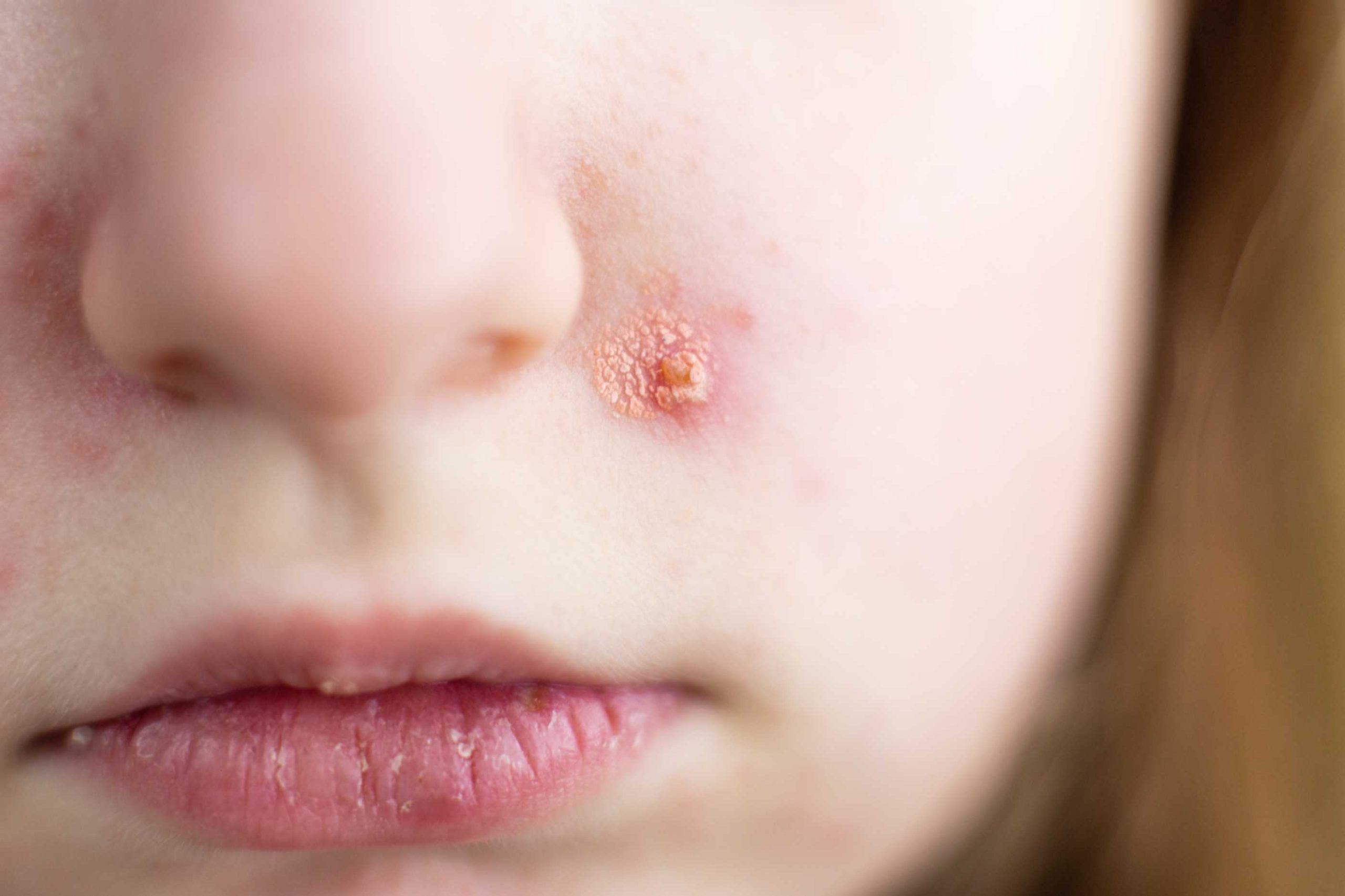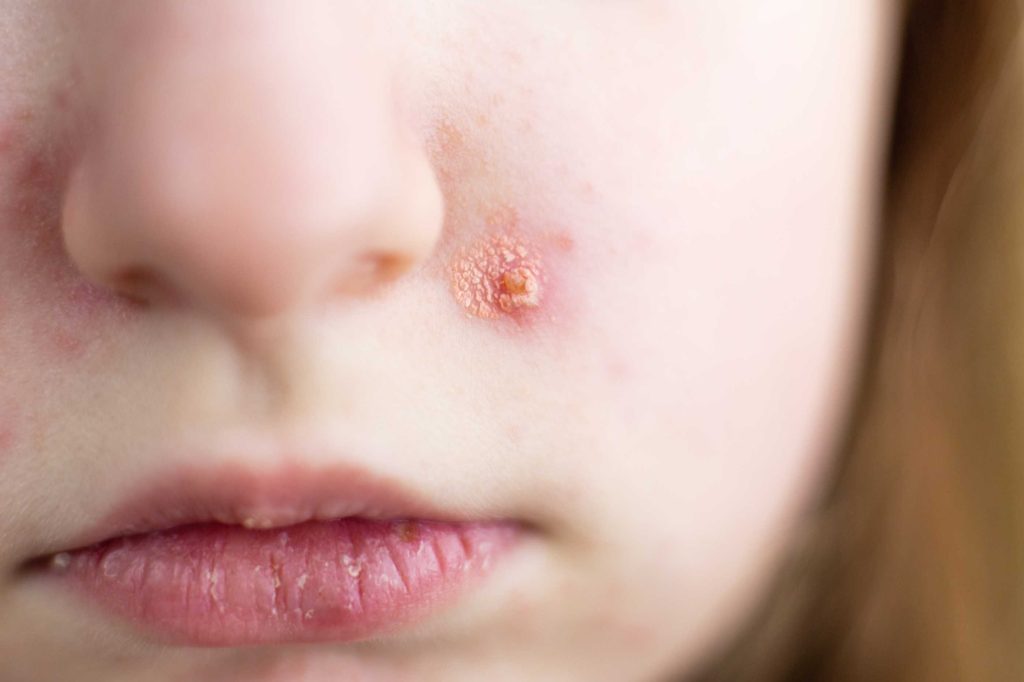
If you have noticed red sores or golden, crusty patches around your child’s nose and mouth, you are probably asking one urgent question. Is impetigo contagious? The short answer is yes, highly. Impetigo is one of the most contagious skin infections seen in the UK, and it can pass between people within days of contact, sometimes sooner. The reassuring news is that it clears up quickly with the right treatment.
In this blog, we will look at what impetigo is, how it spreads, how long it remains contagious, and how you can access impetigo treatment at a pharmacy without waiting for a GP appointment.
What Is Impetigo?
Impetigo is a bacterial skin infection, usually caused by Staphylococcus aureus or Streptococcus pyogenes entering the skin through a cut, graze, insect bite or patch of eczema. It is most common in young children, but impetigo in adults is far from rare, particularly in households where a child is already infected.
Common impetigo symptoms include:
- Red sores that burst quickly and weep fluid.
- Golden or honey-coloured crusts, often around the nose and mouth.
- Fluid-filled blisters in the bullous form of the infection.
- Itching or mild soreness around the affected area.
According to the NHS, sores can appear anywhere on the body, but the face, hands and legs are the most common sites.
How Does Impetigo Spread?
Impetigo spreads through direct contact with the sores or with items that have touched them. Understanding how impetigo spreads is the key to stopping it from moving through your household.
Direct Skin Contact
Touching an infected person’s sores is the fastest route of transmission. This is why outbreaks are so common in nurseries and primary schools, where close contact is constant.
Shared Towels, Bedding and Personal Items
The bacteria survive on fabrics and surfaces for a short time. Towels, flannels, pillowcases, clothing and even toys can pass the infection from one person to another.
Scratching and Spreading It on Your Own Body
Impetigo also spreads by itself. Scratching a sore and then touching another part of your skin can seed new patches, which is why keeping nails short and hands clean matters so much.
How Long Is Impetigo Contagious?
Impetigo remains contagious until the sores have dried and crusted over, or until 48 hours after starting effective treatment. This is the impetigo contagious period recognised by the NHS, and it is also the point at which children can return to school or nursery.
| Situation | Contagious Duration |
| With antibiotic or antiseptic treatment | 48 hours after the first dose or application |
| Without treatment | Until sores fully crust and heal, often 2 to 3 weeks |
NHS guidance recommends hydrogen peroxide 1% cream for localised, non-bullous impetigo, with antibiotic cream or tablets reserved for more widespread or persistent infection. Babies and people with weakened immune systems may need antibiotics to prevent serious illness.
How to Stop Impetigo Spreading
You can dramatically reduce transmission with a few simple habits while the infection heals:
- Wash hands regularly, especially after touching the sores.
- Keep towels, flannels and bedding separate and wash them at a high temperature.
- Avoid touching, picking or scratching the affected skin.
- Keep children off school or nursery until 48 hours after treatment begins.
- Cover sores loosely with clothing or a dressing where practical.
Get Fast Impetigo Treatment from Pharmacy To My Door
You do not need to wait days for a GP appointment to treat impetigo. Under the NHS Pharmacy First scheme, pharmacists can assess impetigo and, where appropriate, supply treatment for adults and children, often on the same day.
At Pharmacy To My Door, our experienced pharmacy team can review your symptoms and recommend the most suitable impetigo treatment. The sooner you start treatment, the sooner you are no longer contagious. Schedule your online consultation with our expert pharmacists today to receive personalised advice and begin treatment promptly.
Frequently Asked Questions (FAQ’s)
Impetigo is mainly contagious once sores are visible, as transmission happens through contact with the fluid they release. However, sores can be easy to miss in the early stages, so good hygiene is sensible as soon as anyone in the household is diagnosed.
Impetigo stops being contagious 48 hours after starting antibiotic or antiseptic treatment. Until that point, avoid close contact, sharing towels and sending children to school.
Yes, adults can catch impetigo through direct contact with a child’s sores or contaminated items. Impetigo in adults is especially common among parents and carers of infected children.
Yes, children should stay off school or nursery until the sores have crusted over, or until 48 hours after treatment starts. This is the standard guidance from the NHS and UK Health Security Agency.
Untreated impetigo usually clears within two to three weeks, but treatment is strongly recommended. It shortens the contagious period, eases symptoms and reduces the small risk of complications.
Impetigo usually begins as small red sores or blisters that burst within a few days, leaving the distinctive golden crust. If you spot these signs, seek advice from a pharmacist promptly.