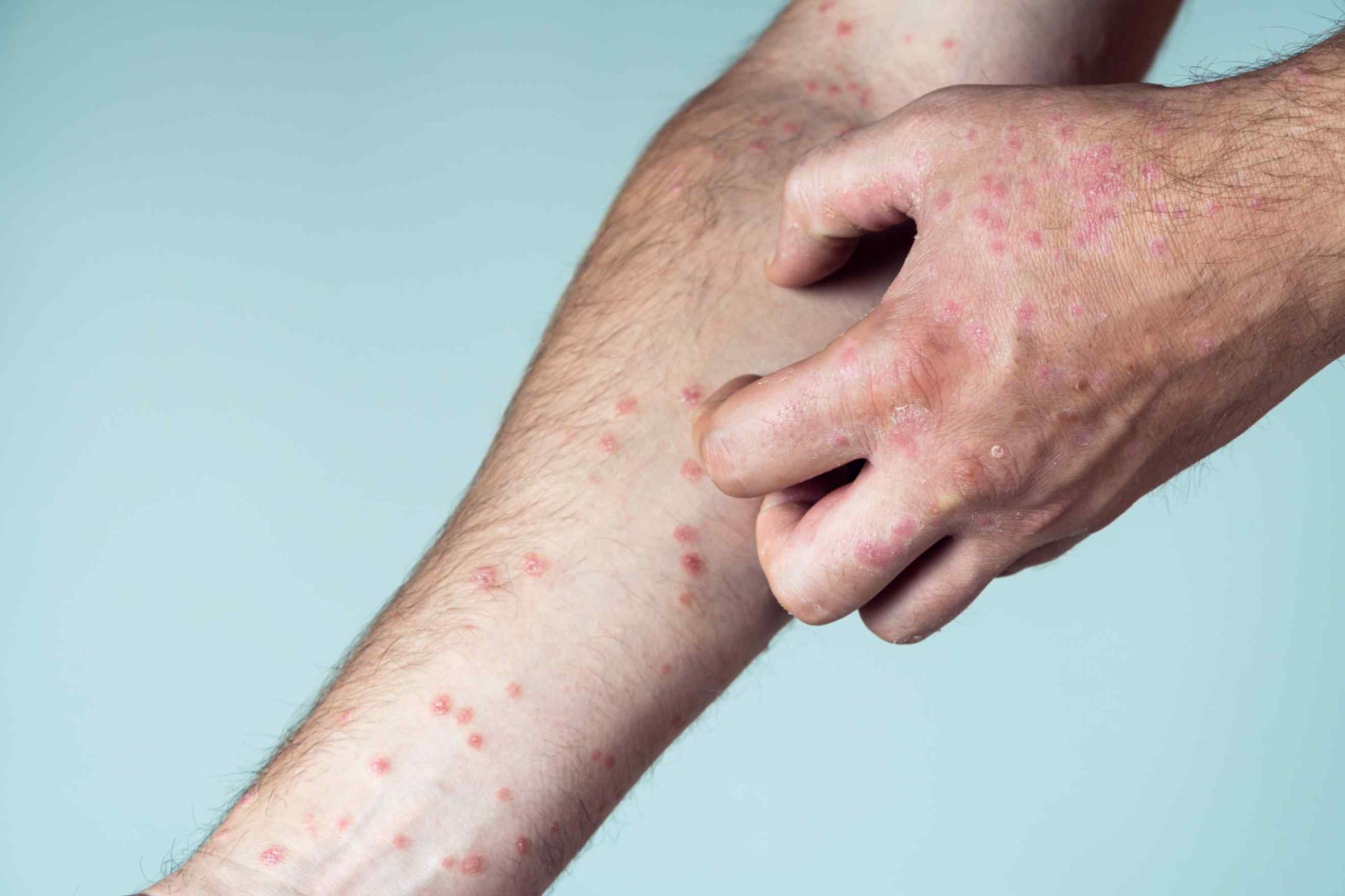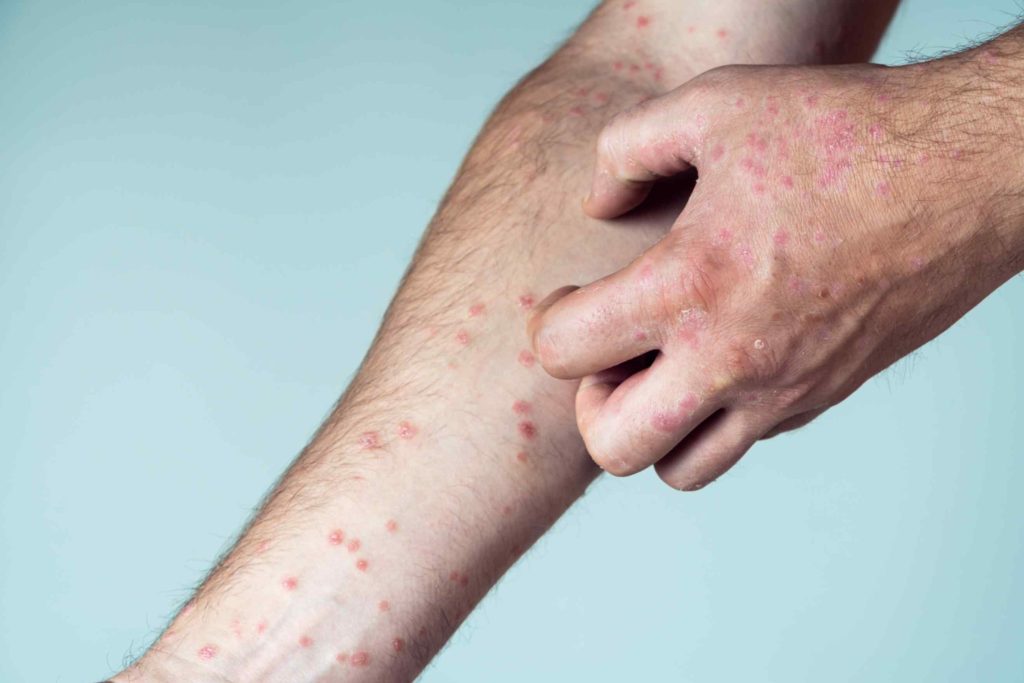
Psoriasis is a long-term skin condition that affects around two per cent of people in the UK. It is not contagious, it is not caused by poor hygiene, and it is not simply dry skin. It is a chronic inflammatory condition driven by an overactive immune response that speeds up the skin cell cycle, causing cells to build up on the surface far faster than they can shed.
There is no cure, but there are effective treatments that reduce symptoms and help manage flare-ups. Many of these are available from a pharmacy, with or without a prescription, depending on the severity of the condition.
What Are the Symptoms of Psoriasis?
Psoriasis symptoms vary between individuals, but the most common presentation is plaque psoriasis, which accounts for around 80 to 90 per cent of cases. It typically presents as:
- Raised, thickened patches of skin (plaques) with a silvery-white scale on top.
- Redness or darker discolouration of the skin beneath and around the plaque, which can appear differently depending on skin tone.
- Itching, burning, or soreness at the affected site.
- Dry, cracked skin that may bleed.
- Patches most commonly appearing on the elbows, knees, scalp, lower back, and nails.
Psoriasis can also affect the joints, a condition known as psoriatic arthritis, which causes pain, stiffness, and swelling. If joint symptoms develop alongside skin symptoms, a GP or rheumatologist referral is important.
What Triggers a Psoriasis Flare-Up?
Psoriasis tends to follow a pattern of flare-ups and periods of remission. Common triggers include:
- Stress, which is one of the most consistently reported triggers across the research.
- Skin injury, including cuts, sunburn, or friction, which can cause new plaques to appear at the site of damage.
- Infections, particularly streptococcal throat infections, which are strongly associated with guttate psoriasis.
- Certain medications, including beta-blockers, lithium, and some antimalarials.
- Alcohol and smoking, both of which are associated with more severe psoriasis.
- Hormonal changes, particularly around puberty, pregnancy, and the menopause.
Understanding and avoiding personal triggers, where possible, is a useful part of managing the condition alongside treatment.
Pharmacy Treatments for Psoriasis: What Is Available?
Several treatments for mild to moderate psoriasis are available over the counter at a pharmacy, or can be recommended by a pharmacist without a prescription. The table below summarises the main options:
| Treatment | Type | Best suited to |
| Emollients (moisturisers) | OTC / GSL | All types of psoriasis; reduces scaling and itch |
| Coal tar preparations | Pharmacy medicine | Plaque psoriasis on body and scalp |
| Salicylic acid | OTC | Removing scale before applying other treatments |
| Medicated shampoos | OTC / Pharmacy | Psoriasis scalp treatment |
| Topical corticosteroids (mild) | Pharmacy medicine | Short-term use on limited areas |
| Vitamin D analogues | Prescription only | Moderate plaque psoriasis |
| Stronger topical steroids | Prescription only | More extensive or resistant plaques |
The most appropriate treatment depends on the location, extent, and severity of the psoriasis, as well as the individual’s response to previous treatments. A pharmacist can advise on OTC options and identify when a GP referral is more appropriate.
Emollients: The Foundation of Psoriasis Management
Whatever else is used, emollients, which are moisturisers and barrier creams, are a cornerstone of psoriasis management for good reason. Psoriasis-affected skin loses moisture rapidly, which worsens scaling, itching, and the risk of cracking. Regular, generous application of an emollient helps maintain the skin barrier, reduces the severity of symptoms, and makes other treatments more effective.
Emollients are available in a wide range of formulations, from light lotions to thick ointments. Thicker preparations tend to be more effective for psoriasis but may be less practical for daytime use. A pharmacist can help identify a formulation that suits both the severity of the condition and the patient’s daily routine.
Psoriasis Scalp Treatment: What Works?
Scalp psoriasis is one of the most common and often one of the most difficult areas to treat, partly because the hair makes it harder to apply products and partly because some treatments are not practical to use on the scalp. Options that are available from a pharmacy include:
- Coal tar shampoos, which reduce scaling and inflammation and are widely available without a prescription.
- Salicylic acid shampoos or preparations, which help to loosen and remove the scale before other treatments are applied.
- Medicated conditioners and scalp applications formulated specifically for psoriasis.
- Emollient scalp oils applied overnight to soften thick scale before washing.
For more persistent or extensive scalp psoriasis, a GP may prescribe a medicated scalp application containing a topical corticosteroid or vitamin D analogue. These are more effective for moderate to severe scalp involvement but require a prescription.
When Should You See a GP About Psoriasis?
A pharmacy can be a useful first stop for mild psoriasis, particularly for someone who has been diagnosed previously and is managing a familiar flare-up. However, a GP assessment is warranted if:
- Psoriasis is newly diagnosed or has changed significantly in appearance or extent.
- Over-the-counter treatments are not providing adequate control after several weeks of consistent use.
- The psoriasis is affecting a large proportion of the body surface area.
- The face, genitals, or skin folds are affected, as these areas require specific treatment approaches.
- Joint pain or swelling has developed alongside skin symptoms.
- The condition is having a significant impact on mental wellbeing or quality of life.
For moderate to severe psoriasis, a GP may refer to a dermatologist, where a wider range of treatments, including phototherapy and systemic or biologic medicines, can be considered.
How Pharmacy To My Door Can Help
If you have been prescribed psoriasis treatment, whether a topical preparation, a systemic medicine, or any other ongoing medication, Pharmacy To My Door can manage your repeat prescription and deliver it directly to your home. Our GPhC-registered pharmacy team is on hand to answer questions about your treatment and ensure your medication is dispensed accurately and on time.
We deliver NHS and private prescriptions free across the UK, making it straightforward to stay on top of a condition that benefits from consistent, uninterrupted treatment.
Managing a repeat prescription for psoriasis or another long-term skin condition? Book an appointment with Pharmacy To My Door today and let us take care of the dispensing and delivery.
This article is for informational purposes only and does not constitute medical or pharmaceutical advice. If you are unsure whether a pharmacy treatment is appropriate for your psoriasis, or if your symptoms are not responding to over-the-counter treatment, please speak to a pharmacist or your GP.
Frequently Asked Questions (FAQ’s)
Mild psoriasis can often be managed with over-the-counter treatments, including emollients, coal tar preparations, and medicated shampoos for scalp involvement. These are available from a pharmacy without a prescription. For moderate to severe psoriasis, prescription treatments are generally more effective, and a GP assessment is recommended.
For mild scalp psoriasis, coal tar shampoos and salicylic acid preparations are a practical starting point and are available without a prescription. For more persistent or extensive scalp involvement, a GP may prescribe a medicated scalp application. Consistency of use is important; scalp psoriasis treatments tend to work best when used regularly rather than intermittently.
Psoriasis is a chronic condition, but it often follows a pattern of flare-ups and periods of remission where symptoms reduce significantly or clear temporarily. Some people experience long periods without significant symptoms; others have more persistent involvement. Treatment can help reduce the frequency and severity of flare-ups, but it does not cure the underlying condition.
Common triggers that can worsen psoriasis include stress, skin injury, streptococcal infections, alcohol, smoking, and certain medications. Keeping skin well moisturised, avoiding known triggers where possible, and following a consistent treatment routine are the most practical steps for day-to-day management. Your GP or dermatologist can advise on specific lifestyle adjustments relevant to your pattern of psoriasis.
No. Psoriasis is not contagious and cannot be passed from person to person through contact. It is an autoimmune condition influenced by genetics and environmental triggers. This is a common misconception that can cause significant distress for people living with the condition, and it is worth stating clearly.